
A Komodo liveaboard running to a proper standard in 2027 carries at least one crew member for every three guests (the better boats run one for every two), puts a captain with valid Indonesian deck certification on the bridge, limits dive groups to four guests per certified guide, and delivers a structured safety briefing before the vessel clears Labuan Bajo harbour. Those four checks, ratio, certificate, guide limit, briefing, separate a well-run boat from a pretty one faster than any photo gallery. If an operator cannot state its crew count or name its captain’s certificate in one reply, treat that silence as your answer.
Last updated: August 16, 2026
Why crew standards stopped being fine print
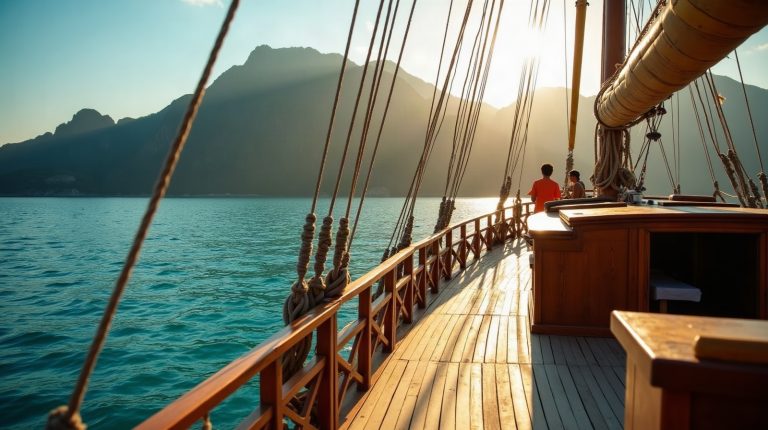
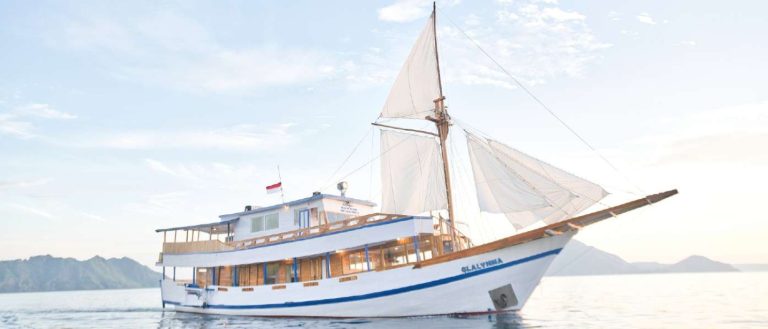
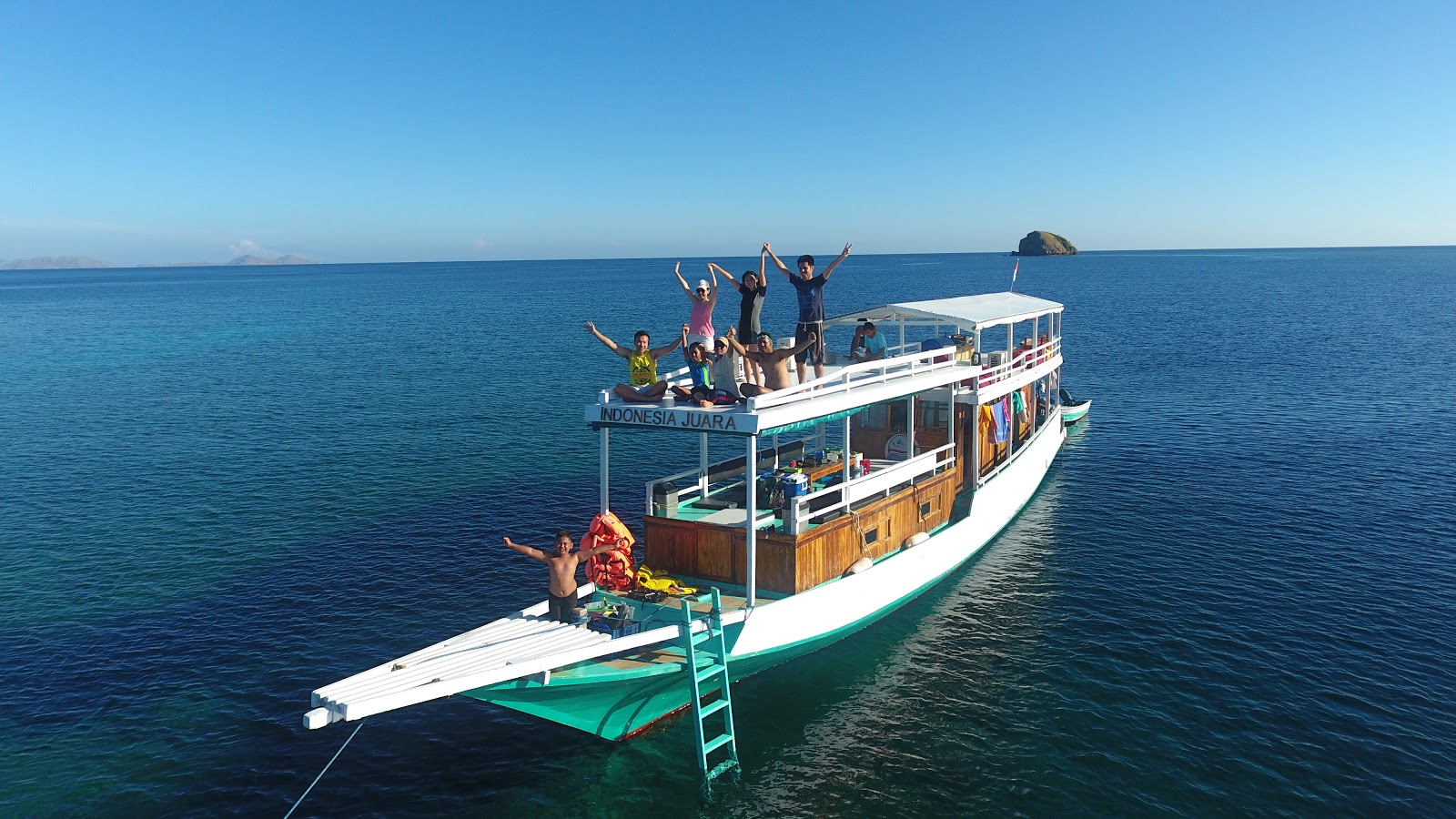
Labuan Bajo has launched more new phinisi in the past four years than in the two decades before. The hulls photograph beautifully and, on Instagram, interchangeably. Teak decks look like teak decks. What a drone shot cannot show you is whether the man at the helm holds a certificate for that tonnage, whether anyone on deck watches swimmers at Siaba Besar, or whether the galley team doubles as the tender crew. In 2027, with so many lookalike boats competing for the same anchorages, the crew roster has become the honest differentiator. Guests have caught on. Operators are catching up.
The ratio to ask for first
Ask for the working crew count and divide. A ten-guest phinisi runs comfortably with six to eight crew, which puts the ratio between 1:1.5 and 1:2. Budget schooners stretch to 1:3 and can still be safe if roles stay separated. Beyond 1:3, something gives, and it is rarely the cooking.
On a properly staffed boat, each of these jobs belongs to a different person:
- Captain: navigation, anchoring decisions, weather calls, and the authority to cancel a crossing.
- Engineer: generators, watermaker, bilge checks, tender engines.
- Galley team: meals for guests and crew, three times a day, in a moving kitchen.
- Deckhands: lines, anchor work, tender driving, swim watch.
- Cruise leader or guide: the schedule, park logistics, briefings, and guest questions at six in the morning.
Where thin crews show first
Understaffing announces itself in small ways before it becomes dangerous. The cook drives the tender, so lunch is late and the pickup is later. Nobody stays topside during a snorkel drop at a current-swept site. The evening briefing shrinks to a sentence. Read recent guest reviews for phrases like “we waited for the tender” and “no one explained the plan.” Those are ratio problems wearing service clothing.
Paperwork that counts
On the bridge and in the engine room
Indonesian certification scales with vessel size and route. Smaller traditional boats sail under an SKK 60 Mil certificate; larger phinisi need ANT-rated officers, and the engine room should have its own ATT-certified engineer rather than a deckhand who happens to be good with machines. Crew members on a compliant vessel hold Basic Safety Training (BST), which covers firefighting, sea survival, and first aid. You do not need to memorise the acronyms. Email the operator and ask which certificate the captain holds and whether the full crew carries BST. A serious office answers inside a day, without defensiveness.
In the water
Dive excursions need certified divemasters or instructors, an oxygen kit on the boat, and group sizes capped at four divers per guide at sites like Batu Bolong and Castle Rock, where reading the current is the whole job. Snorkel outings deserve the same discipline: a guide in the water, a spotter in the tender. Treks on Komodo and Rinca are led by licensed park rangers; the boat’s guide coordinates timing and permits rather than replacing them.
The first-hour briefing test
You can score a boat within an hour of stepping aboard. A real safety briefing happens before the anchor comes up, gathers the whole guest group, and covers ground in specifics rather than reassurances:
- The muster point and what the alarm sounds like.
- Life jacket locations, with one taken out and fitted rather than pointed at.
- Fire extinguisher points and the rule about the engine room door.
- Tender boarding, swim boundaries, and how currents behave at that day’s sites.
- Communications: which VHF channel the boat monitors, what satellite device it carries, and what happens where phone signal dies.
- The earthquake and swell protocol, a fixture since August 2026: move to deep water, take a headcount, keep a listening watch on the radio.
A crew that reads this from a laminated card in two languages is doing it right. A charming welcome speech with no muster point is theatre.
What the 15 August 2026 earthquake changed
The magnitude 7.7 earthquake that struck the region on 15 August 2026 became an unplanned audit of the entire fleet. No destructive tsunami followed; tide gauges recorded a maximum wave of 0.36 metres, and the harbourmaster reopened sailings the same day under Maklumat 05/MP-VIII/2026. On paper, a one-day event. On the water, the differences between crews were stark. Guests on disciplined boats described a calm move to deeper water, a headcount, and a captain narrating what he knew and what he did not. Guests elsewhere described crews as uncertain as they were.
The aftermath reshaped expectations within weeks. Operators wrote earthquake response into standing orders. Radio checks joined the morning routine on boats that had treated the VHF as furniture. Guests began asking questions about crews that, a season earlier, nobody thought to ask. The standards in this article were always good practice; since 15 August they have become the market’s baseline.
Vetting an operator from your desk
Most of this checklist runs before you commit to anything. Cross-reference several sources rather than one glossy website: this walkthrough of how to choose a Komodo tour operator in 2027 covers licensing and red flags in depth, and an independent shortlist of the best Komodo liveaboards for 2027 shows how different boats describe their own crews, which is revealing in itself. Transparency is a signal too. Komodo Luxury — a registered Indonesian PT under Juara Holding Group Limited with 1,500+ verified guest reviews (4.9/5) — publishes cabin and crew details across its Komodo liveaboard fleet, which lets you do the ratio arithmetic before you write a single enquiry. Whoever you sail with, hold them to the same arithmetic.
Five questions worth emailing
- How many working crew sail on my departure, and what are their roles?
- What certificate does the captain hold for this vessel?
- Do all crew members carry Basic Safety Training?
- What is your dive guide ratio, and is oxygen carried on board?
- Can you outline your safety briefing and your earthquake protocol?
Five questions, one email, ten minutes of an operator’s time. The offices worth sailing with answer all five without blinking. The ones that dodge have told you everything a crew list would have.
Frequently Asked Questions
What is a good crew-to-guest ratio on a Komodo liveaboard in 2027?
One crew member for every two guests is the standard on well-run boats, and one for every three is a workable floor on budget schooners. Beyond 1:3, roles start doubling up and both service and safety watch suffer. Ask for the working crew count before you commit and do the division yourself.
What certifications should the captain and crew of a Komodo liveaboard hold?
The captain should hold an Indonesian deck certificate matched to the vessel’s size, such as SKK 60 Mil for smaller traditional boats or an ANT rating for larger phinisi. The engineer should carry an ATT certificate, and every crew member should have Basic Safety Training (BST). A reputable operator will confirm all of this in writing when asked.
Are Komodo liveaboards sailing normally after the August 2026 earthquake?
Yes. The magnitude 7.7 earthquake on 15 August 2026 produced no destructive tsunami, with a maximum recorded wave of 0.36 metres, and the harbourmaster reopened sailings the same day under Maklumat 05/MP-VIII/2026. The lasting effect has been better crew preparedness, as most operators have since added earthquake and swell protocols to their briefings.
What should a proper liveaboard safety briefing cover?
Before departure, the crew should walk guests through the muster point, life jacket locations, fire extinguisher points, tender and swimming rules, and the boat’s communications setup. Since August 2026, a thorough briefing also includes the earthquake protocol: moving to deep water, taking a headcount, and keeping a listening watch on the radio. A briefing skipped or reduced to a single sentence is a warning about everything else on board.
How many divers should each guide supervise at Komodo's dive sites?
Four divers per certified guide is the accepted ceiling at current-swept sites such as Batu Bolong and Castle Rock. Currents in the park can shift within a single dive, so guides need small groups to manage drift and safety stops. Confirm the ratio in writing before your trip and ask whether oxygen is carried on board.